Raga Dance: The Complete Encyclopedia
Raga Dance represents a groundbreaking fusion of traditional Indian performing arts and modern interactive gaming technology. This innovative rhythm game has captivated millions worldwide by authentically recreating the rich tapestry of India's classical and folk dance traditions.
Developed through extensive collaboration with renowned gurus, musicians, and choreographers, the game offers an unprecedented digital platform for experiencing India's cultural heritage. Unlike conventional dance games, Raga Dance emphasizes authenticity, historical accuracy, and cultural respect while delivering engaging gameplay.
Core Concept
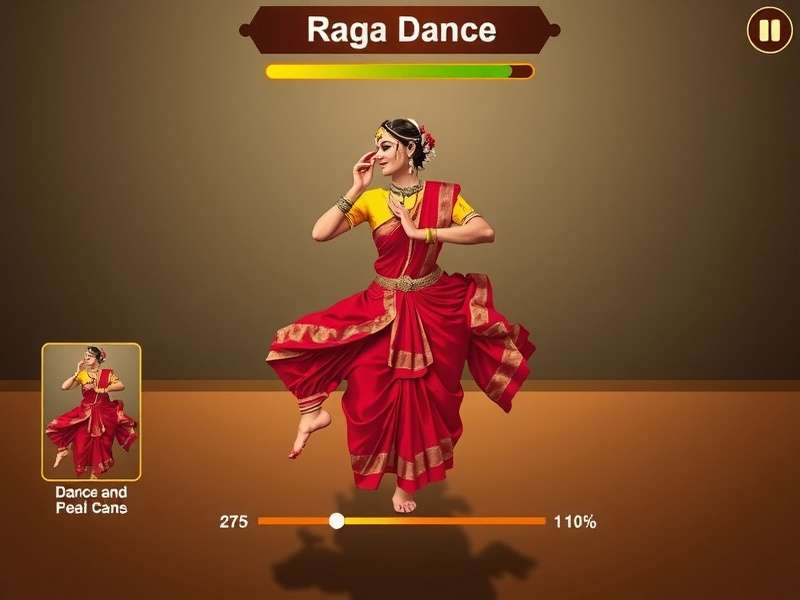
At its essence, Raga Dance transforms players into virtual performers who must execute precise dance movements in synchronization with classical Indian music. The game's sophisticated motion recognition technology evaluates the accuracy, timing, and expression of each movement according to traditional dance parameters.
Gameplay Mechanics and Features
The Raga Dance gameplay experience is built upon three foundational pillars: rhythmic precision, cultural authenticity, and progressive learning. Players navigate through increasingly complex choreographies while the game's adaptive difficulty system ensures an appropriate challenge level for all skill tiers.
Control System
Utilizing either motion controllers or traditional input devices, players replicate intricate mudras (hand gestures), facial expressions, and footwork with precise timing. The game's proprietary animation system seamlessly blends player inputs with professionally captured motion data.
Scoring Methodology
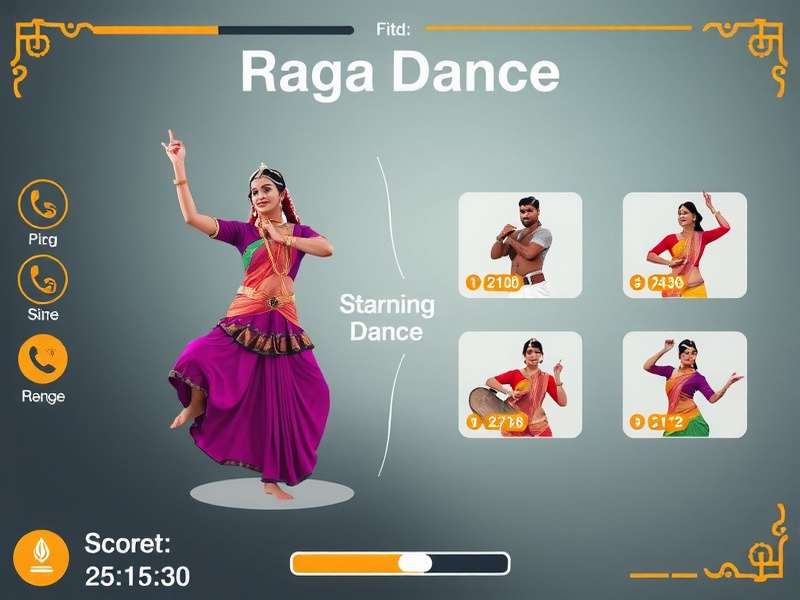
Performance evaluation follows traditional Indian aesthetic principles with points awarded for Tala (rhythm), Bhava (expression), and Rasa (emotional essence). Mastery requires understanding the cultural context behind each movement.
Progression System
Players advance through traditional Indian learning stages: Shishya (beginner), Sadhak (practitioner), and Kalakar (artist). Each level unlocks new dance forms, costumes, and musical compositions, creating a compelling progression journey that mirrors traditional dance education.
Authentic Dance Forms in Raga Dance
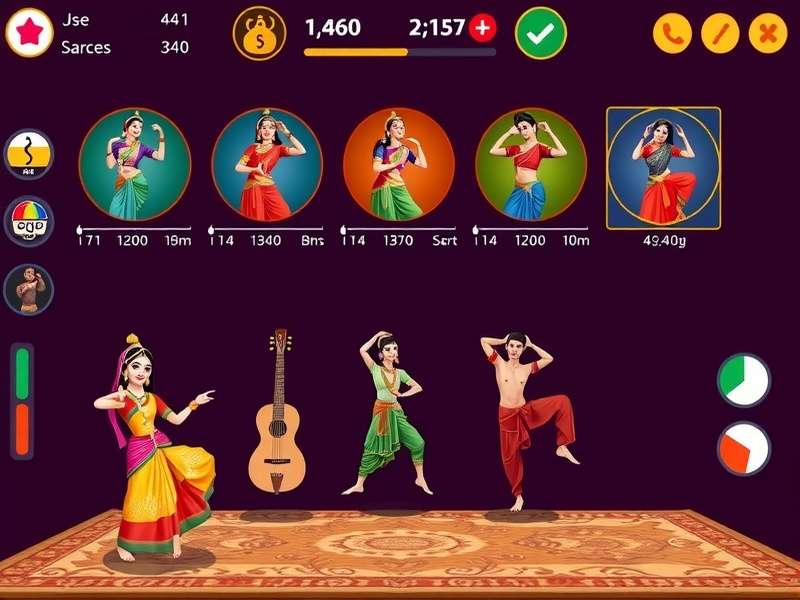
The game features eight major classical Indian dance forms, each meticulously researched and digitally reconstructed. The development team collaborated with renowned dance academies and cultural institutions to ensure historical accuracy and respectful representation.
Bharatanatyam ?
Originating from Tamil Nadu temples, this ancient form emphasizes geometric precision, elaborate footwork, and expressive eye movements. In Raga Dance, players learn the foundational Adavus before progressing to complex items.
Kathak ?
The storytelling dance of North India, characterized by graceful spins, intricate footwork, and expressive gestures. The game captures the distinctive ghungroo rhythms and dramatic narrative elements.
Odissi ?
Known for its fluid torso movements and sculptural poses inspired by temple carvings. Raga Dance emphasizes the characteristic Tribhanga posture and delicate hand gestures unique to this Odisha tradition.
- Kathakali - Elaborate makeup and dramatic storytelling from Kerala
- Kuchipudi - Energetic and graceful dance-drama from Andhra Pradesh
- Manipuri - Fluid, circular movements from Northeastern India
- Mohiniyattam - Lasya-style feminine dance from Kerala
- Sattriya - Devotional dance from Assam's monasteries
Musical System and Raga Implementation
The auditory experience in Raga Dance is as meticulously crafted as the visual elements. The game features an extensive library of authentic Indian classical music, with compositions specifically created for gameplay while adhering to traditional principles.
Raga-Based Composition System
Each dance sequence is accompanied by music composed in specific ragas (melodic frameworks) and talas (rhythmic cycles). The game dynamically adjusts musical complexity based on player performance, creating an immersive audiovisual experience that remains authentic to Indian classical traditions.
Instrumentation and Sound Design
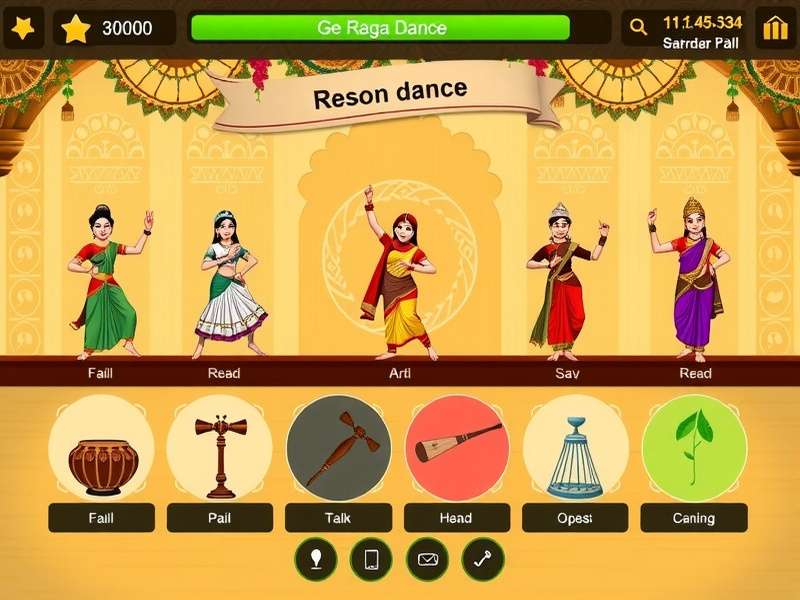
The game features high-quality recordings of traditional instruments including tabla, mridangam, sitar, veena, flute, and santoor. Each instrument was recorded in professional studio environments with master musicians to ensure authentic tonal quality and performance techniques.
Interactive Rhythm Mechanics
Players must synchronize their movements to complex tala patterns ranging from simple 8-beat cycles to advanced 108-beat structures. The game's visual rhythm interface adapts traditional Indian notation systems for intuitive player comprehension.
Cultural Impact and Educational Value
Beyond entertainment, Raga Dance has emerged as a significant cultural preservation and education tool. The game has been adopted by educational institutions, cultural organizations, and diaspora communities worldwide as an engaging introduction to Indian classical arts.
Global Recognition
The game has received numerous awards for cultural innovation, including the UNESCO Digital Heritage Prize and the Global Gaming Awards for Cultural Impact. Its unique approach to combining entertainment with cultural education has been widely praised by critics and players alike.
Educational Integration
Several universities have incorporated Raga Dance into their ethnomusicology and dance curriculum. The game's detailed historical context, biographical information about legendary artists, and theoretical explanations make it a valuable educational resource.
Community and Competitive Scene
A vibrant global community has developed around the game, with regular tournaments, workshops, and cultural events. The annual Raga Dance World Championship attracts participants from over 60 countries, fostering cross-cultural exchange and appreciation for Indian performing arts.
Cultural Preservation
The game's extensive digital archive of dance movements, musical compositions, and historical context serves as an important resource for preserving intangible cultural heritage for future generations.
Technical Innovation and Development
The creation of Raga Dance required groundbreaking technological solutions to accurately capture and replicate the subtle nuances of Indian classical dance. The development team employed cutting-edge motion capture, artificial intelligence, and procedural animation technologies.
Motion Capture Precision
Over 200 hours of professional dancer performances were captured using high-fidelity motion capture systems. The data was then processed through proprietary algorithms to ensure fluid transitions between thousands of individual dance movements.
AI-Powered Evaluation
The game's scoring system utilizes machine learning models trained on expert dancer evaluations. This allows for nuanced assessment of performance quality beyond simple timing accuracy, including expression, posture, and stylistic authenticity.
Cultural Consultation
An extensive panel of cultural experts, including renowned gurus, musicologists, and historians, guided every aspect of development to ensure respectful and accurate representation of traditions.
Future Developments and Expansions
The ongoing development of Raga Dance continues to push boundaries in cultural gaming. Upcoming expansions will introduce additional dance forms, regional folk traditions, and enhanced educational features to further the game's mission of cultural preservation.
Planned Features
- Virtual Reality integration for immersive performance
- Collaborative multiplayer dance sequences
- Regional folk dances from across India
- Advanced composition tools for creating custom routines
- Historical dance reconstructions based on temple art
- Enhanced social features for global cultural exchange
The enduring legacy of Raga Dance lies in its successful demonstration that digital entertainment can serve as a powerful medium for cultural preservation, education, and global connection. By making India's rich dance heritage accessible and engaging to contemporary audiences, the game has created a new paradigm for cultural gaming worldwide.