Bhutani Battle: The Ancient Indian Strategy Game ?
Discover the rich history, intricate rules, and strategic depth of Bhutani Battle, a traditional Indian board game that has captivated players for centuries.
Game Overview
Bhutani Battle is a traditional Indian strategy board game that originated in the northeastern regions of the Indian subcontinent. This captivating game combines elements of warfare strategy with mathematical precision, creating a unique gaming experience that has stood the test of time.
The game is typically played by two players on a specially designed board featuring a grid pattern. Each player commands an army of pieces with different movement capabilities, with the ultimate objective of capturing the opponent's commander or achieving a strategic position that makes further resistance impossible.
Key Characteristics of Bhutani Battle:
- Strategic depth with relatively simple rules
- Cultural significance in Indian tradition
- Mathematical elements in movement and positioning
- Emphasis on foresight and tactical planning
Unlike many Western strategy games, Bhutani Battle incorporates elements of Indian philosophical concepts, where the balance between attack and defense mirrors the cosmic balance described in ancient texts. This philosophical underpinning adds a unique dimension to the gameplay experience.
Historical Origins
The origins of Bhutani Battle can be traced back to ancient India, with references found in texts dating as far back as the 6th century. The game is believed to have developed in the kingdom of Kamarupa, which corresponds to modern-day Assam and surrounding regions.
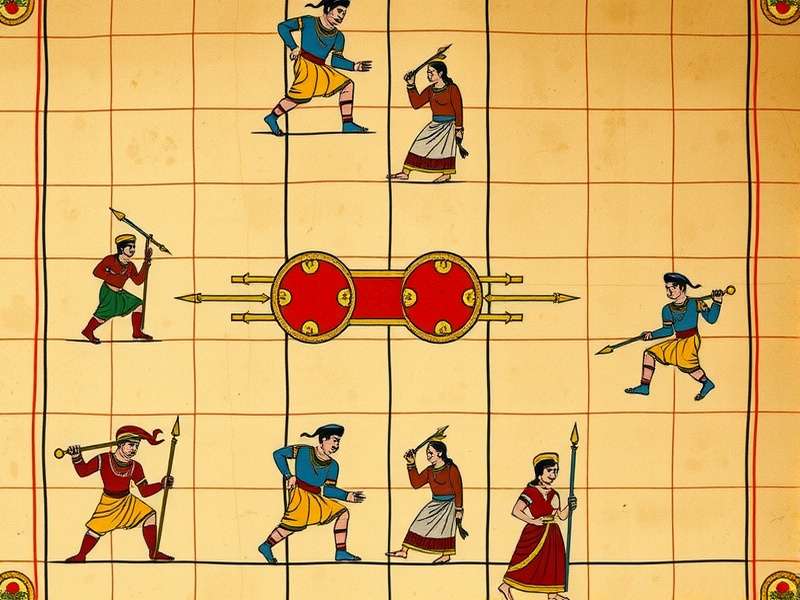
Historical records suggest that Bhutani Battle was initially played by royalty and military strategists as a training tool for battlefield tactics. The game's mechanics simulate various aspects of ancient Indian warfare, including troop movements, flanking maneuvers, and strategic positioning.
Over centuries, the game spread throughout the Indian subcontinent, with regional variations developing in different areas. Despite these variations, the core principles of Bhutani Battle remained consistent, preserving the essential strategic elements that define the game.
During the medieval period, Bhutani Battle experienced a golden age, with tournaments being held in royal courts and treatises written on advanced strategies. The game's popularity declined during colonial rule but has seen a resurgence in recent decades as part of efforts to preserve traditional Indian games.
Game Rules & Mechanics
The rules of Bhutani Battle are deceptively simple, yet they allow for immense strategic complexity. Understanding these rules is essential for mastering the game and appreciating its depth.
Board Setup
The game is played on a rectangular board divided into a grid of 8x8 squares. Each player begins with 16 pieces arranged in two rows on their side of the board. The pieces include various types with different movement patterns and capabilities.
Board Configuration
The standard Bhutani Battle board features 64 squares arranged in an 8x8 grid. The board is traditionally made of wood with hand-carved patterns, though modern versions use various materials.
Piece Types
Players command different types of pieces: Infantry, Cavalry, Elephants, and the Commander. Each piece type has unique movement rules that reflect their historical battlefield roles.
Movement Rules
Each type of piece in Bhutani Battle moves according to specific patterns. Infantry pieces move forward or sideways one square, Cavalry pieces move in an L-shape, Elephant pieces move diagonally, and the Commander can move one square in any direction.
| Piece Type | Movement Pattern | Special Abilities |
|---|---|---|
| Infantry | 1 square forward or sideways | Can promote when reaching opponent's back row |
| Cavalry | L-shape (like chess knight) | Can jump over other pieces |
| Elephant | Diagonal, any number of squares | Powerful attacking piece |
| Commander | 1 square in any direction | Game ends if captured |
Capturing & Winning
Pieces capture by moving into squares occupied by opponent pieces. The primary objective is to checkmate the opponent's Commander, similar to chess. A player can also win by achieving a positional advantage that makes the opponent's position untenable.
Stalemate situations are resolved according to traditional rules that consider material advantage and positional strength. In tournament play, these situations are often adjudicated by experienced players or referees.
Advanced Strategy
Mastering Bhutani Battle requires understanding both tactical patterns and strategic principles. Advanced players spend years studying classic games and developing their understanding of positional play.
Opening Principles
The opening phase of Bhutani Battle sets the stage for the middle game. Key principles include controlling the center of the board, developing pieces to active squares, and ensuring the Commander's safety. Traditional opening sequences have names derived from historical battles or strategic concepts.
Unlike chess, Bhutani Battle openings often involve slower development with an emphasis on solid structures. The unique movement patterns of the pieces create different strategic considerations compared to other strategy games.
Middle Game Tactics
The middle game in Bhutani Battle is characterized by complex tactical patterns and strategic maneuvering. Players must balance attack and defense while looking for opportunities to gain material or positional advantages.
Common tactical themes include forks, pins, and discovered attacks, though these take different forms due to the unique movement capabilities of the pieces. Positional understanding is crucial, as the value of pieces can change dramatically based on the board situation.
Strategic Tip: In Bhutani Battle, controlling the four central squares is often more important than material advantage. A well-coordinated attack with fewer pieces can defeat a larger but disorganized force.
Endgame Techniques
The endgame in Bhutani Battle requires precise technique, especially when only a few pieces remain on the board. Understanding basic checkmating patterns with limited material is essential for converting advantages into victories.
Unlike chess, Bhutani Battle endgames often involve the Commander taking a more active role. The game's unique promotion rules for Infantry pieces can also dramatically shift endgame dynamics.
Cultural Significance
Bhutani Battle holds a special place in Indian cultural heritage, representing not just entertainment but also philosophical concepts and historical traditions. The game reflects values that have been important in Indian society for centuries.
Educational Tool
Historically used to teach strategic thinking and decision-making to young princes and military commanders.
Social Bonding
Played during festivals and gatherings, fostering community connections and intergenerational interaction.
Cultural Preservation
Efforts to revive Bhutani Battle are part of broader movements to preserve traditional Indian games.
The game's mechanics incorporate concepts from Indian philosophy, particularly the balance between opposing forces. The relationship between different piece types mirrors the social structure of ancient Indian kingdoms, with each piece having a specific role in the overall strategy.
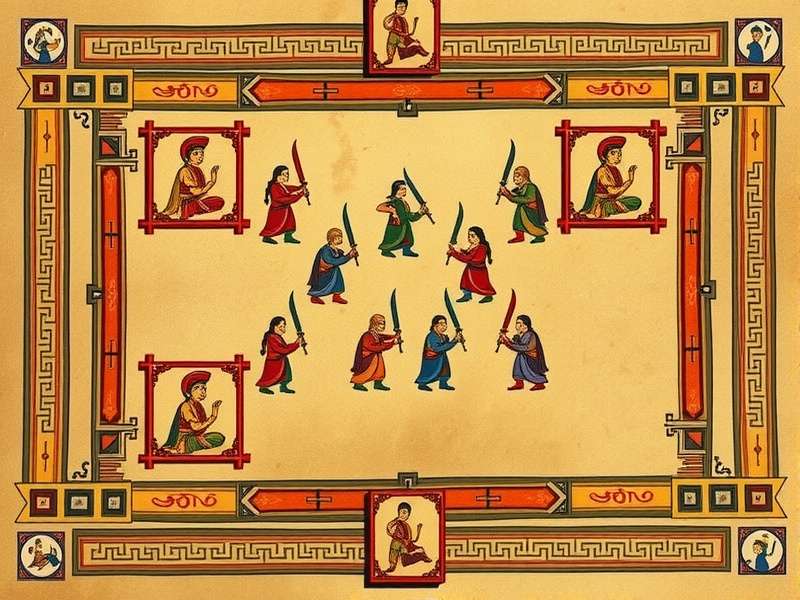
In contemporary India, Bhutani Battle has experienced a revival as part of cultural heritage initiatives. Tournaments are held regularly, and the game is increasingly being introduced in schools as an educational tool that develops logical thinking and strategic planning skills.
The future of Bhutani Battle looks promising, with digital adaptations making the game accessible to a global audience while preserving its traditional essence. These developments ensure that this ancient Indian strategy game will continue to be enjoyed by future generations.